
Residential pool excavations
In-ground pool digs near fences, footings, or driveways. Shoring keeps the perimeter stable while the pool shell goes in.
Excavation protection
From lightweight residential panels through to heavy commercial systems. Pool digs, basement excavations, boundary protection, and permanent retaining walls. Every system engineered to the site loads, signed off before excavation begins, certified on completion.
What it is
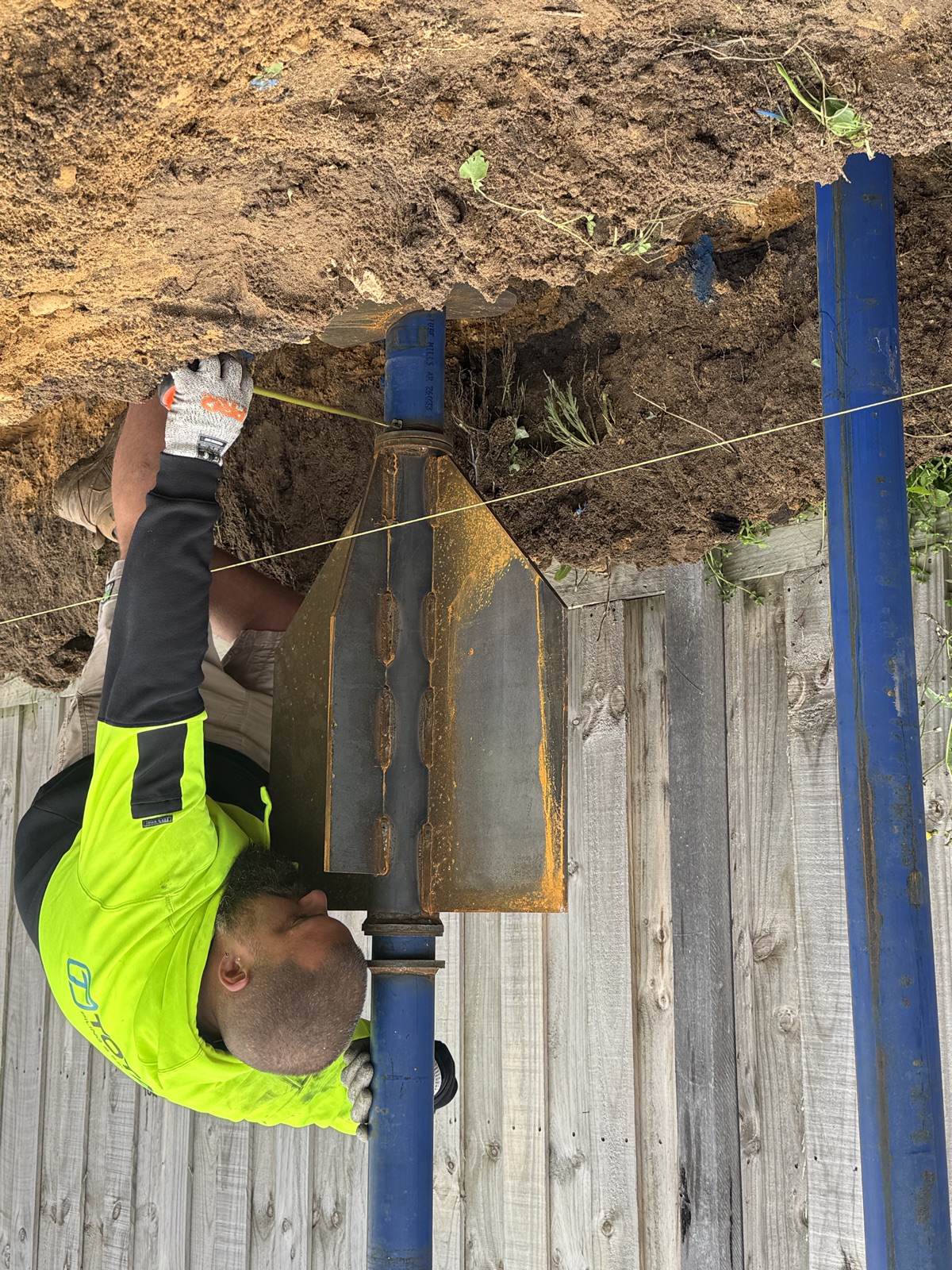
Any time you cut into the ground next to existing structures, fences, or boundaries, the soil wants to slump inward. Shoring is the engineered system that stops it. We supply and install residential panels for pool digs and small basements.
Shoring is temporary by design - it holds the dig open while you build, then depending on circumstances can come out once the permanent structure (slab, basement wall, pool shell) is in place to take over. Where the design calls for a permanent retaining wall instead, the same engineering capability covers that work too. Both designed and certified to spec, and installed by a crew that has worked in piling across residential and commercial sites for two decades.
Every system is engineered to the actual loads at the actual site - dig depth, soil profile, surrounding structures, and water table all feed in. Signed off before excavation begins.
The specs
From residential pool surrounds to commercial site cuts. Each system engineered to actual loads.
System range
Residential to civil
Engagement
Supply and install
Engineering
Per-site signed off
Documentation
Full engineering documentation
Where shoring is needed
Four common scenarios. If your project sits near a boundary, a tall structure, or a deep excavation, you almost certainly need shoring.
In-ground pool digs near fences, footings, or driveways. Shoring keeps the perimeter stable while the pool shell goes in.
New extension footings or slab digs that get within a few metres of an existing house, driveway, or services. Protect what's already there.
Digging near a neighbour's fence, retaining wall, or footings. Boundary shoring holds their structure up while you put yours in.
Larger commercial pads, civil works, and government sites where the engineer specifies structural shoring to council standards.
How a shoring job runs
Four steps. Itemised quote, sized to the dig, engineered and signed off.
Plans, dig depth, adjacent structures, soil report. Email sales@totalpiling.com.au or call Rob direct.
Know exactly what's included: panel quantities, the shoring system, and the required engineering documentation.
Loads, depths, and pier sizes calculated against the dig and surrounding structures. Documentation pack prepared for the client.
Panels installed before the dig begins, holding the ground back so the excavation stays safe and stable.
Common questions
Engineered shoring solutions for both temporary excavation support and permanent retaining applications. Depending on your project and engineering requirements, our steel shoring systems can either be removed after construction or remain in place as part of the finished retaining structure.
Almost always for in-ground pools, and definitely if the dig is anywhere near a fence, footing, driveway, or neighbouring structure. Pool excavations are deep and the surrounding soil wants to collapse inward, especially in sand or wet clay. Shoring keeps the dig open safely while the pool shell goes in. Builders and pool installers usually scope this in - if yours hasn't, ask.
When you dig close to a boundary, the soil under the neighbour's fence, driveway, or footings can slump into your excavation. Shoring panels driven or set along the boundary hold the soil in place during the dig, eliminating that risk.
Got a dig coming up
Send the plans, dig depth, and any photos of the adjacent structures. We'll size the system, quote it, and book the engineering.