
Residential builds
New homes, slab pads, sloping blocks, reactive-clay sites. Engineered to the soil report, certified on completion.
Core specialty
Residential, commercial, infrastructure and civil foundation specialists delivering engineered screw pile solutions. No concrete, minimal spoil, 100% Australian-made piles, AS2159 compliant, and full engineering certification with every installation.
What it is
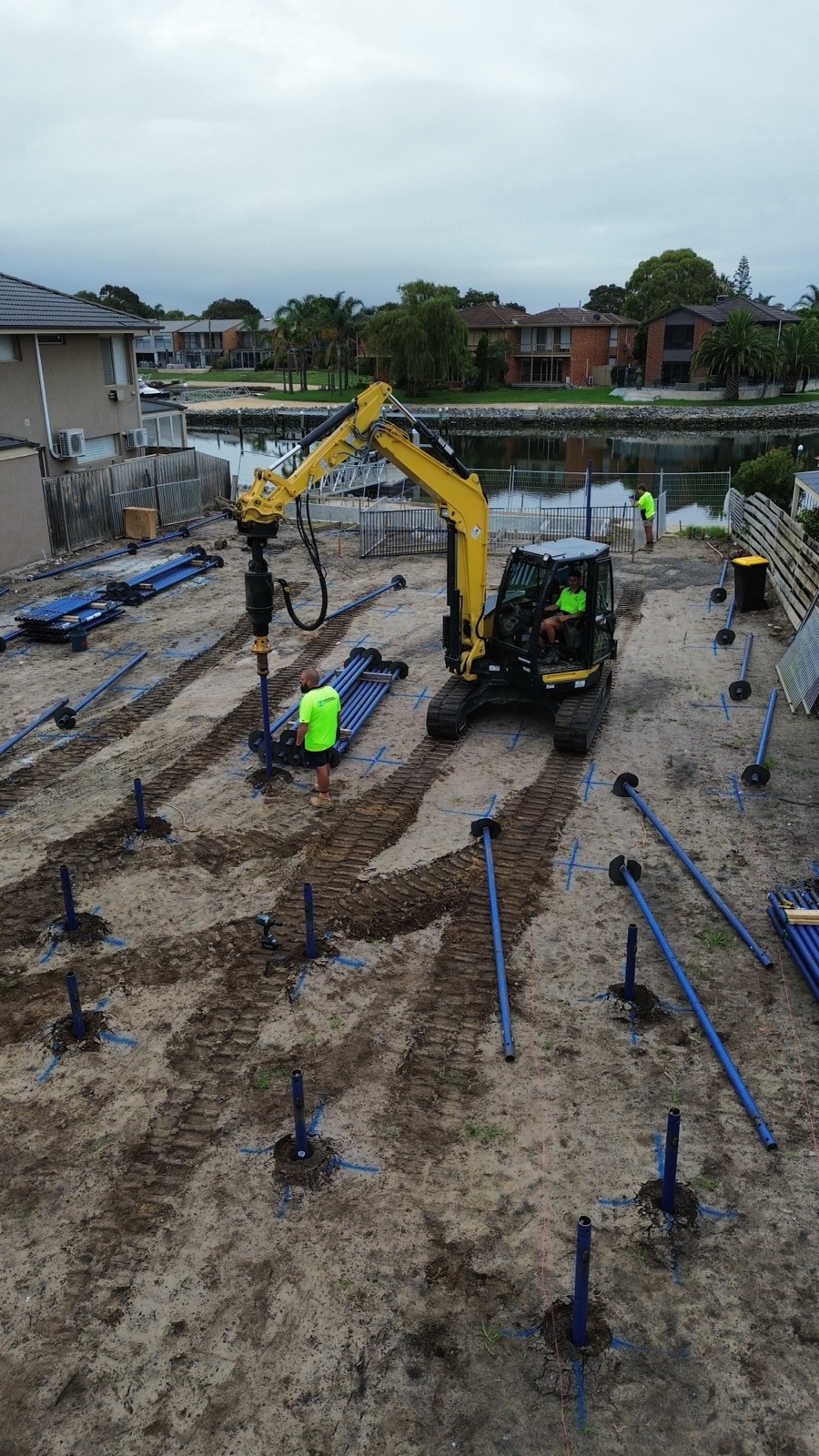
A screw pile is a steel shaft with one or more welded helical plates (helix) that gets rotated into the ground using a drive motor mounted on an excavator. The helix pulls the pile down to the load-bearing depth specified by your engineer. Once it reaches the design torque, the pile is in - structurally complete, certified, and ready to build on.
There is no concrete to pour, no excavation pit, and almost no spoil to truck off site. For builders, that means fewer surprises on the ground. For homeowners, that means foundations going in around a live home or developed site without the disruption of traditional methods. For civil and government contractors, it means installs that hold up under engineering scrutiny and audit.
Total Piling has been installing certified screw piles across Victoria for two decades, from suburban Melbourne backyards through to rural infrastructure projects. Same crew, same standard.
The specs
Australian-made, load-certified, suited to most Victorian soil profiles.
Pile sizes
76 to 114 mm
Stocked standard range. Larger sizes upon request.
Load capacity
10,000 to 25,000+ kg
Per-pile for standard stocked range.
Soil suitability
Most profiles
Especially strong in reactive clay. Works in sand, silt, and most mixed Victorian profiles.
Service life
50, 75, 100+ years
When properly designed, installed to torque, and corrosion-rated for the soil profile.
Where it fits
The same piling method, scaled to the project. Residential through to government infrastructure.
New homes, slab pads, sloping blocks, reactive-clay sites. Engineered to the soil report, certified on completion.
Foundations for additions, second-storey adds, large decks, granny flats. Tight-access capable - mini-excavator through side gates.
Pool surrounds, waterfront residential pads, jetty foundations. Screw piles handle soft, wet, and high-water-table sites where concrete struggles.
Multi-house developments, modular commercial buildings, retail pads. Programmed grids of piles delivered to schedule.
Larger civil work, road and rail-adjacent installs, utilities, signage and gantry foundations. Engineered to spec, audit-ready.
Prefab and modular builds, transportable homes, relocatable classrooms and site offices. A level, engineered pile grid set out to the module footprint, ready for the build to land straight on.
How an install runs
A clear five-step process. Itemised quote, engineered to spec, certified on completion.
Email plans, engineering, and a soil report to sales@totalpiling.com.au, or call Rob or Tom.
Pile counts, sizes, depth, connection detail, certification - all on the page, all priced.
Pile sizing and depth confirmed against your engineer's design and the soil report. Adjustments handled before we book in, not on the day.
Crew arrives with the right machine and pile stock for the job. Install torque is recorded on each pile.
AS2159 certification and full documentation handed over. Engineered to spec, load-tested, ready to build on.
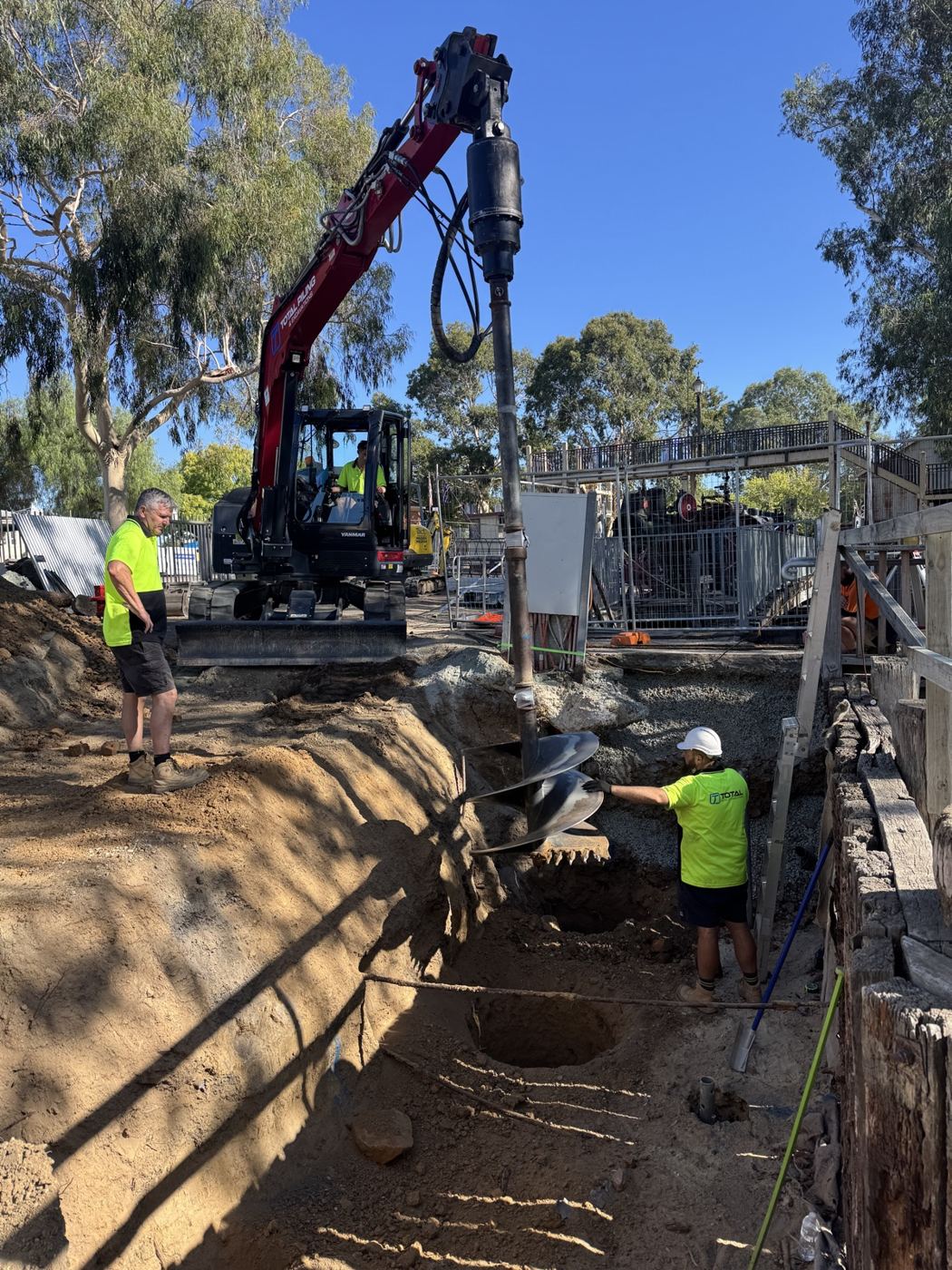
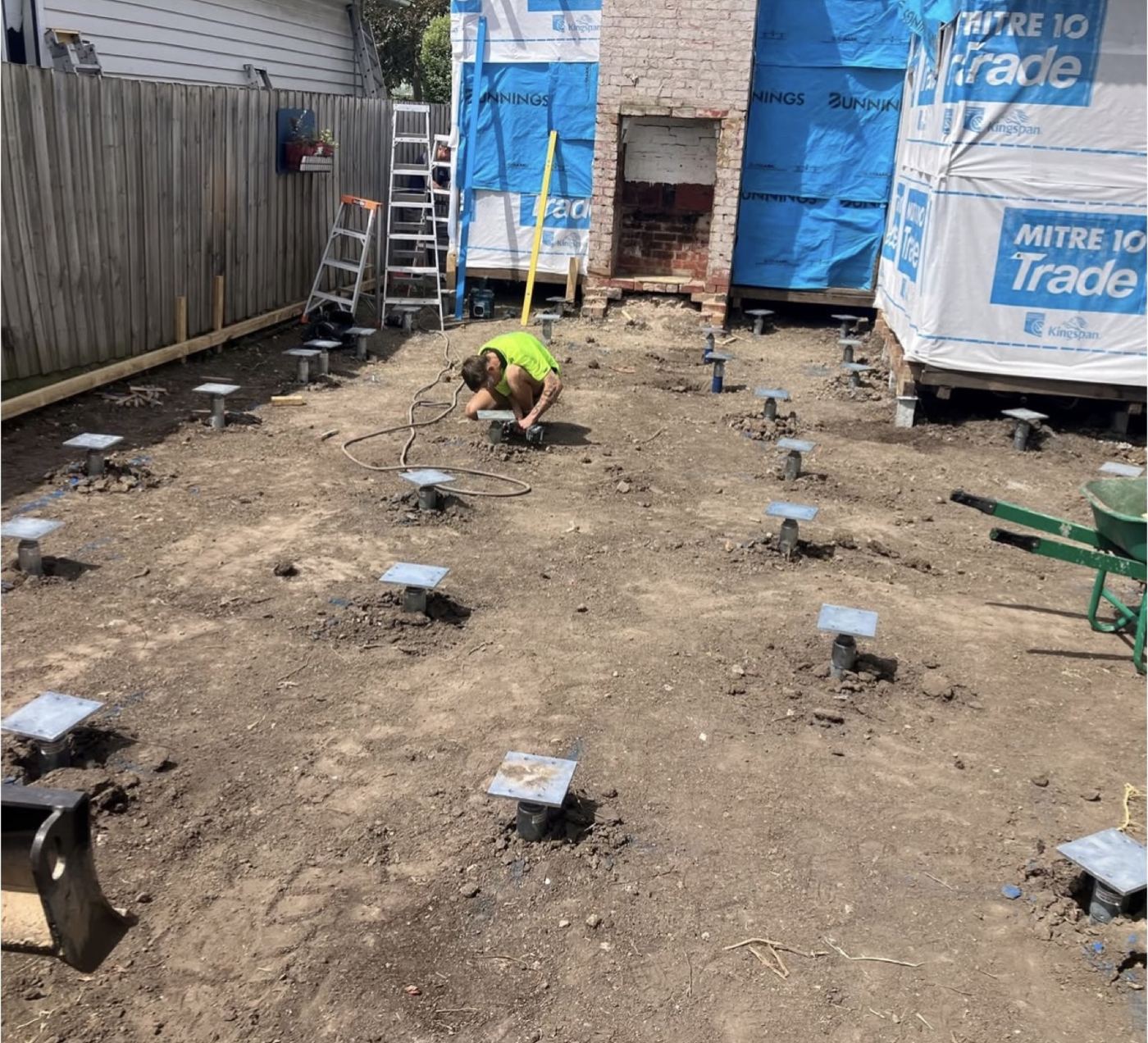
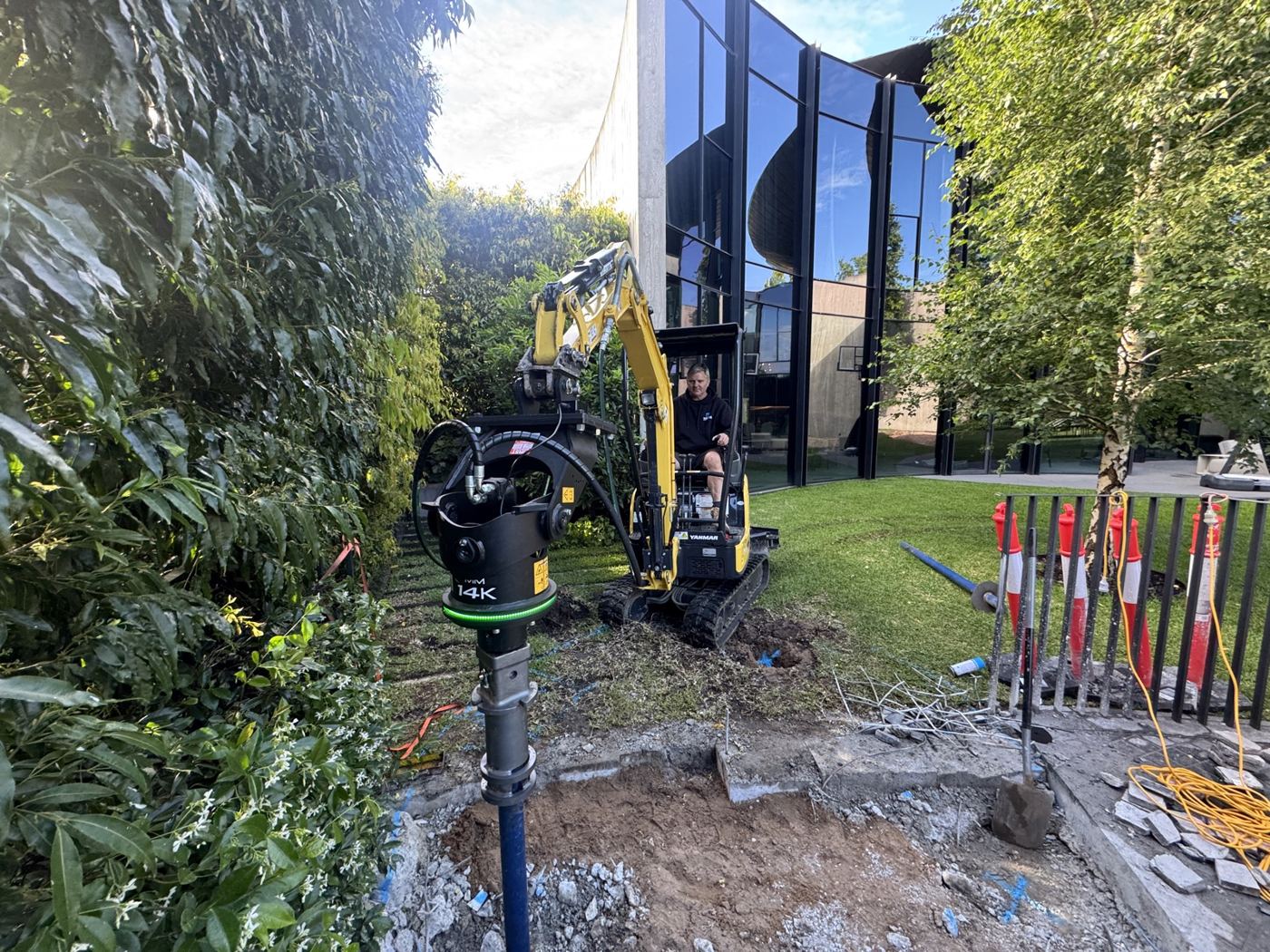
Screw piling, on the ground
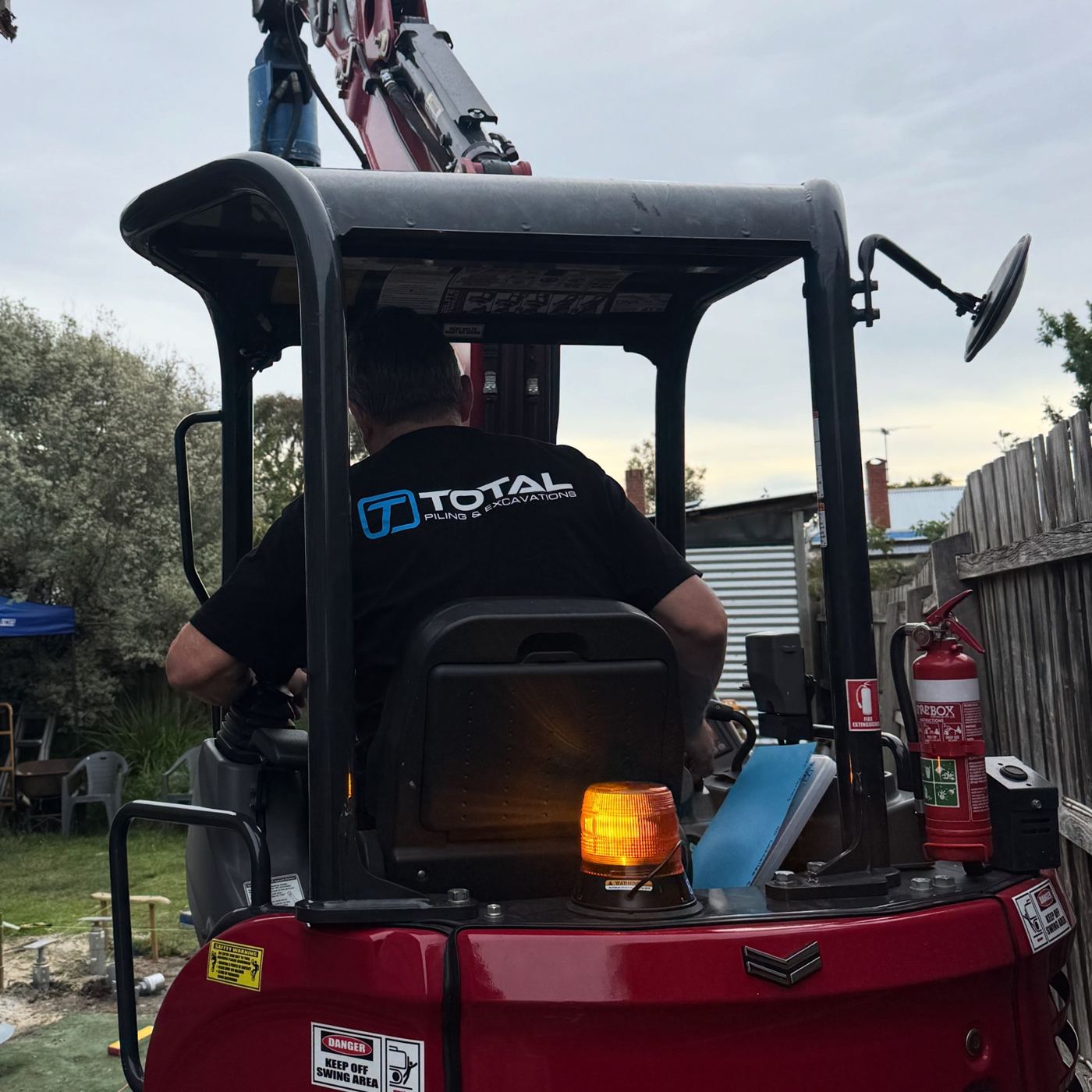
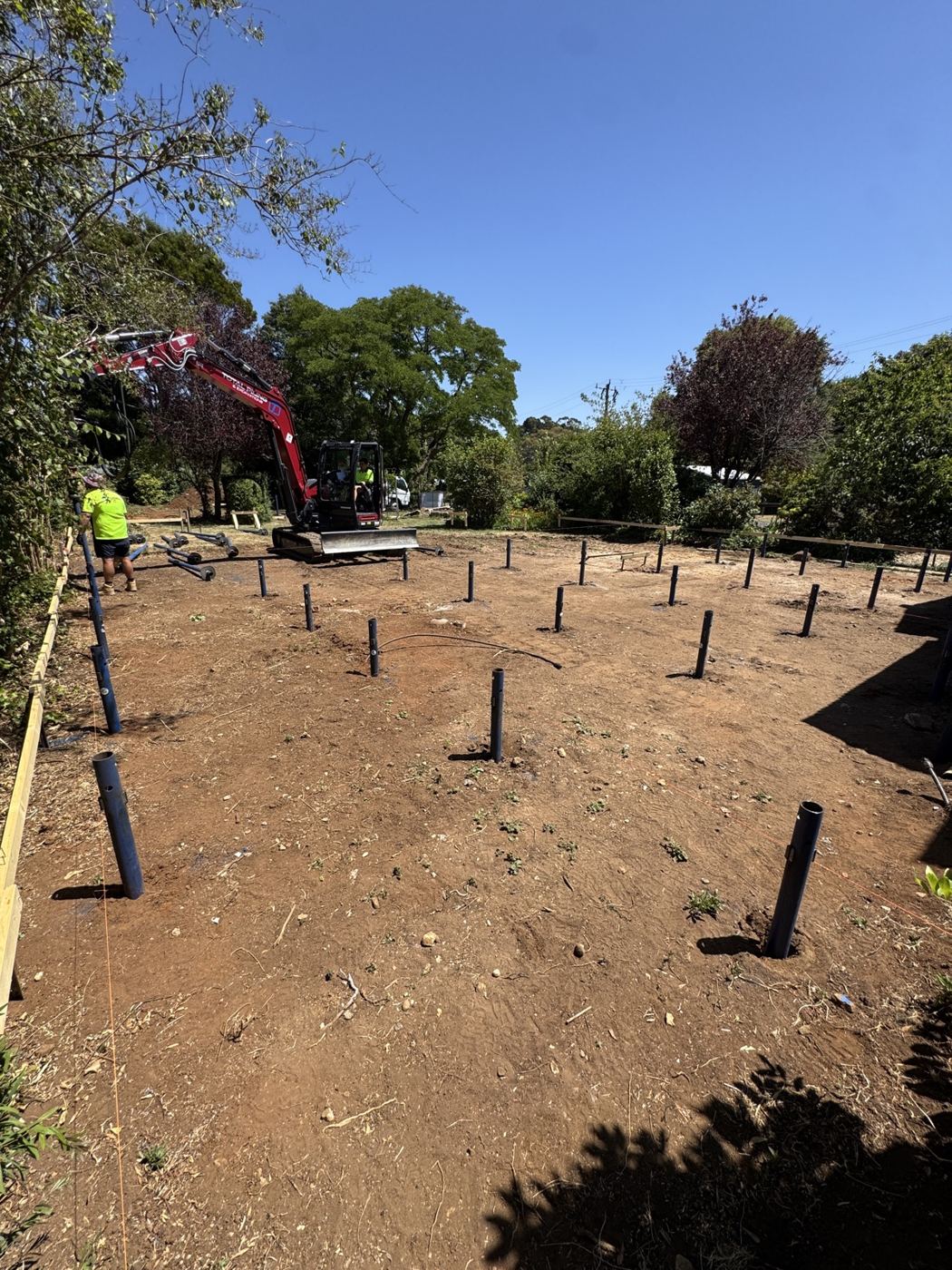
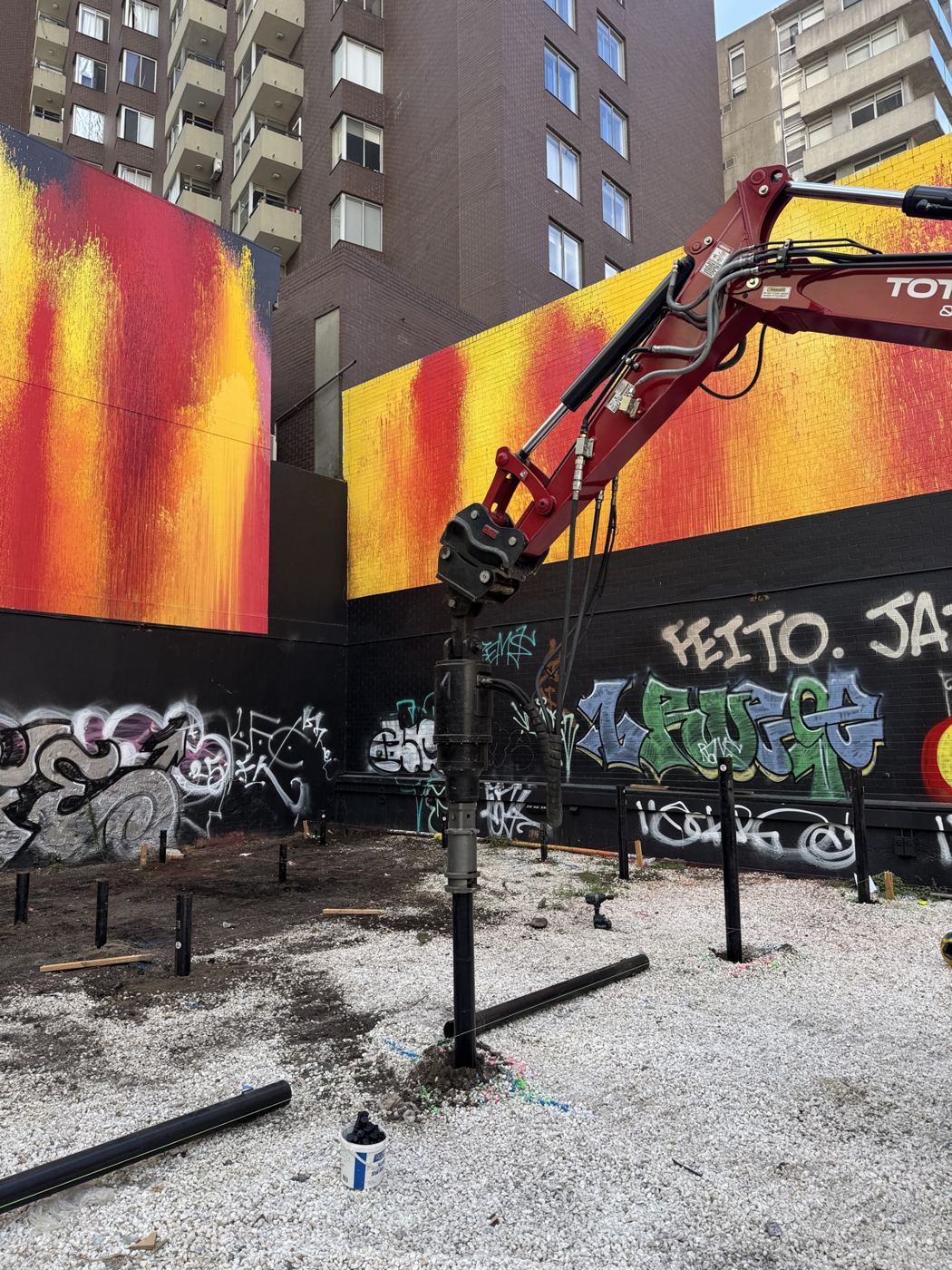
Inner-city CBD, rural pads, tight-access residential, boundary works. Every site has its own challenge.
Common questions
We arrive on site with the right machine and pile stock, drive the piles to the load-bearing depth specified by the engineer, and fully certify the install upon completion. There is no concrete to pour and no spoil to truck off site, so existing landscaping, paths, and lawns usually survive the install untouched.
Yes. Screw piles are particularly strong in reactive clay - which is common across Melbourne and large parts of Victoria - because they pass through the active zone and anchor in stable load-bearing soil below. They also work well in sand, silt, and most mixed profiles. The soil report drives the engineering decision on pile size and depth.
Yes. Screw piles are mechanically driven into the ground, not poured, so they can be unscrewed and removed at end of life or relocated for temporary structures. This is one of the things that sets them apart from concrete piers - they leave a far smaller footprint if the site ever needs to be returned to original condition.
Every install is engineered to AS2159 (the Australian Standard for piling design and installation). We record install torque on each pile against the engineer's design, perform load testing where specified, and hand over a certificate of compliance with the build documentation.
Where we work
Melbourne metro plus the regional centres. We bring the machine, the pile stock and the certification with us.
Murray floodplain ground, riverfront and rural builds, and the Campaspe corridor across to Moama.
Reactive basalt clay across the plains and sand over clay toward the Bellarine coast.
Variable goldfields ground, sloping blocks and heritage sites across central Victoria.
Heavy clay that stays wet through winter, plus historic worked ground in the older suburbs.
Deep alluvial Goulburn Valley soils, agricultural pads and food processing footings.
Latrobe Valley alluvial flats and made ground, residential through to industrial and plant.
Ready when you are
Send the plans, engineering, and soil report. We'll come back with a quote, no obligation.